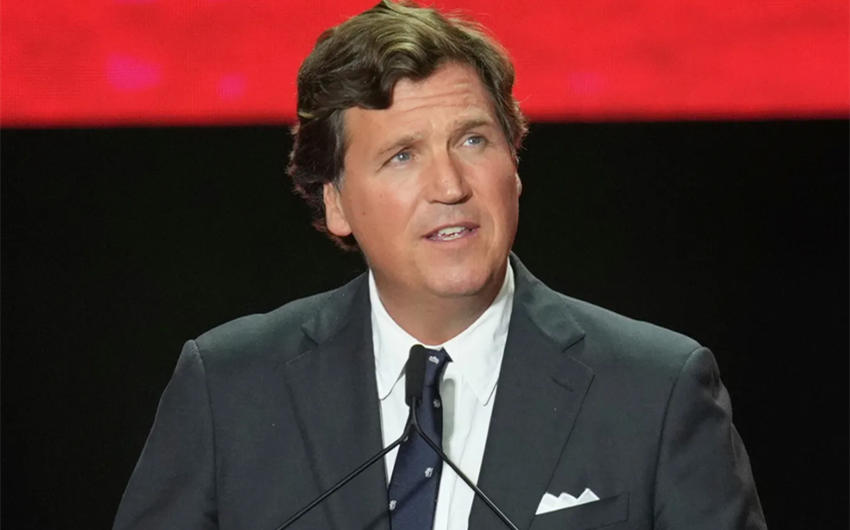
Tucker Carlson Net Worth In 2026: Salary History, Media Ventures, And Assets
If you’re looking up Tucker Carlson net worth, you’re probably trying to separate two things: how much money he’s generated over decades in media, and how much wealth he’s actually kept after taxes, costs, and lifestyle spending. The honest answer is that there’s no single “official” number, but most realistic estimates put Tucker Carlson’s net worth in the tens of millions—often discussed in a range around $30 million to $50 million in 2026. That range makes sense when you add up years of top-tier TV earnings, book deals, ownership stakes, and the money he now makes from subscription media.
Quick Facts About Tucker Carlson
- Full name: Tucker Swanson McNear Carlson
- Profession: Political commentator, media host, author
- Best-known TV era: Primetime cable news hosting
- Major business shift: Building an independent subscription platform after cable
- Key income categories: TV contracts, book deals, subscriptions, advertising, appearances, and equity
- Net worth in 2026: Commonly estimated in the $30M–$50M neighborhood (varies by methodology)
Tucker Carlson Net Worth In 2026: The Most Realistic Range
When you see numbers online, you’ll notice two extremes: “Tucker is worth a fortune” and “Tucker is only worth a few million.” The reality lands between hype and understatement. In 2026, a sensible estimate for Tucker Carlson’s net worth is generally in the tens of millions, most commonly placed around $30 million to $50 million.
Why that range? Because Tucker’s money isn’t tied to just one paycheck anymore. He’s spent years building a personal media brand that can earn in multiple ways at the same time—TV salary (historically), book money, and now a subscription business that he has far more ownership control over than a typical cable host ever does.
Why Tucker Carlson’s Net Worth Is Hard To Pin Down
Net worth is simple in theory (assets minus liabilities) and messy in real life—especially for media personalities. If you’re trying to understand the uncertainty, here’s what makes Tucker’s number difficult to lock:
- There’s no official public ledger. You’re relying on estimates, not audited statements.
- Contracts can include hidden complexity. Base pay, bonuses, and noncompete arrangements can change the math.
- Ownership stakes matter more than salary. If Tucker owns equity in a media company, that value is not “cash,” but it still counts.
- Subscription revenue is private. You can see pricing, but you can’t see subscriber totals unless the company releases them.
- Expenses are huge at this level. Teams, legal, production, travel, security, and taxes can take a big bite.
So when you read a super-specific number (like $47,238,119), treat it as entertainment. The best approach is a realistic range backed by how media wealth typically works.
How Tucker Carlson Makes Money
To understand Tucker Carlson net worth, you want to think in “income buckets.” Tucker’s wealth is built from several buckets, not one. Here are the big ones.
1) Television Salary And Contract Earnings
For years, Tucker’s core income engine was high-profile cable news hosting. Top primetime hosts can earn very large annual amounts, and Tucker was positioned in that tier during his peak cable years.
Even after leaving cable, contract-related income can still matter depending on how separation terms, remaining contract obligations, and restrictions were structured. The main takeaway is that Tucker’s TV era likely generated eight figures per year at certain points, and that kind of multi-year run is the foundation of a “tens of millions” net worth.
2) Tucker Carlson Network: Subscription Revenue And Ownership
The most important post-cable money shift is Tucker building a direct-to-audience subscription platform. When you run your own subscription service, the math is different:
- You’re not just paid a salary—you can own the upside.
- You can monetize the same audience through subscriptions, ads, and sponsorships.
- You can turn content into a library that keeps earning over time.
Even if you don’t know subscriber counts, you can see the strategy: recurring revenue. Recurring revenue is what turns “famous” into “wealthy,” because it creates predictability and lets you invest and plan with confidence.
3) Advertising, Sponsorships, And Distribution Deals
Once you’re off cable, you can build revenue that looks more like a digital media company than a TV show. That typically includes:
- Ad revenue tied to video distribution (where applicable)
- Sponsorships baked into episodes or series
- Brand partnerships aligned with the audience
- Licensing/distribution arrangements depending on platform strategy
This matters for net worth because advertising money can be high-margin once the production machine is running smoothly. If the show is already being made and distributed, incremental ad/sponsor dollars often drop more cleanly to the bottom line than you’d expect.
4) Book Deals And Publishing Income
Publishing is another major pillar. High-profile political/media authors can land very large advances, especially when publishers believe the author can move serious volume. When you add in royalties, special editions, and audio, books can be a meaningful chunk of lifetime earnings.
Here’s the net worth logic: book deals tend to come in large upfront checks (advances paid in phases), and those checks often turn into investments—real estate, portfolios, businesses—rather than being spent like regular income.
5) Speaking Fees And Live Appearances
For public figures with strong name recognition, speaking can be a quiet but powerful money stream. Paid appearances can include:
- ticketed live events
- conference speeches
- moderated conversations
- brand-backed appearances (where relevant)
Even a handful of high-fee events per year can add meaningful income, and it also feeds the brand: the more people see you live, the more they subscribe, buy books, and share clips.
6) Equity And Business Stakes
This is where “net worth” can jump without anyone seeing a single paycheck. If Tucker has ownership stakes in media ventures (or related businesses), those stakes can be worth millions on paper.
And equity is the kind of wealth that grows while you sleep. Salary stops when you stop working. Equity can grow for years—especially if the business expands, sells, or raises money at higher valuations.
Costs And Expenses That Shrink The Headline Numbers
If you want to think clearly about Tucker Carlson net worth, you also have to think about what it costs to operate at this level.
- Production costs: staff, editors, producers, equipment, studio space
- Legal and compliance: a serious expense for high-profile commentary media
- Security and logistics: often overlooked, frequently significant
- Representation: lawyers, agents, business managers, accountants
- Taxes: high earners get hit hard, especially with multiple income streams
This is why gross earnings and net worth are not the same thing. Someone can pull in huge revenue and still have a much smaller net worth than you’d expect if they’re spending aggressively or running an expensive operation.
What Could Push Tucker Carlson’s Net Worth Higher From Here?
If you’re watching the trajectory, Tucker’s biggest wealth upside isn’t a return to a traditional TV paycheck. It’s scale. A few growth levers could expand his net worth:
- More subscribers: recurring revenue is the kingmaker
- More shows and a larger slate: turning one host brand into a network-style library
- Higher-margin monetization: sponsorships and premium tiers
- Equity growth: if the company valuation rises, net worth rises
- New publishing deals: more books, more advances, more royalties
If you’re thinking like an investor, the story is simple: Tucker is building a media business where he can own the distribution and capture more of the profit.
What Could Lower His Net Worth?
Just to keep it real: net worth doesn’t only go up. The biggest risks tend to be business risks, not “internet drama” risks.
- High fixed costs: big staff and production spending can become heavy in slow periods
- Platform dependence: if distribution relies heavily on one platform, changes can affect reach
- Legal exposure: legal costs can be enormous in media
- Audience fatigue: any subscription business must keep delivering value to reduce churn
That said, Tucker’s brand is strong enough that even moderate success in subscriptions can keep him firmly in the “tens of millions” category.
The Bottom Line
If you’re looking for a practical answer to Tucker Carlson net worth in 2026, the most reasonable estimate is that he’s worth somewhere around $30 million to $50 million, depending on how you value his business ownership and how you interpret past contract earnings. His wealth comes from a mix of major TV-era paychecks, publishing money, speaking and appearances, and—most importantly—his shift into subscription media where he can own more of the upside.
Featured image source: https://fortune.com/2025/11/17/trump-tucker-carlson-nick-fuentes-antisemitism-maga-groyper/